Showing posts with label women's history. Show all posts

Monday, June 24, 2024

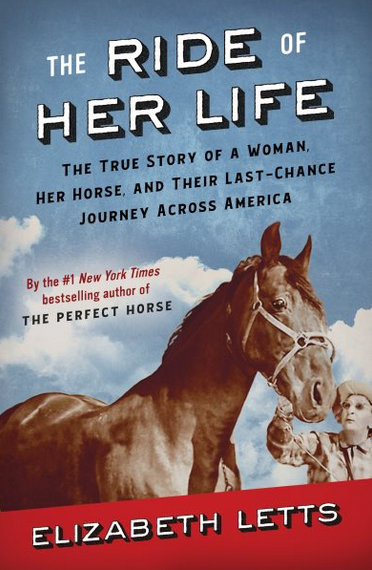
The Ride of Her Life: The True Story of a Woman, Her Horse, and Their Last-Chance Journey Across America

by Elizabeth Letts

I thoroughly enjoyed reading this book.  As it opens, 62-year-old Annie Wilkins goes to the hospital with a bout of pneumonia.  While there recovering, her Uncle Waldo is sent to a care home where he dies.  When Annie returns home the doctor tells her to live restfully.  She has a farm to take care of, now without the help of her uncle, and she doesn’t have enough money to pay taxes on the farm to keep it.  She decides to buy a horse and ride to California to fulfill the dream her mother had of visiting the state.  (And she chooses an interesting way to earn money for the horse.)  She buys Tarzan, a Morgan horse, packs up her possessions—at least what she believes she’ll need on the trip—and with her little dog, Dépêche-toi, they set off from Minot, Maine, in November, 1954. 

The book recounts Annie's travels, negotiating highways with her horse, her interactions with those she meets along the way including those who give her shelter and help, and incorporates a bit of history of some of the places she stayed.  Through the book we get an idea of what it was like living in America in the mid-1950s.  One of the themes Letts brings up several times is the change in outlook from the view of a safe America to one of uncertainty about strangers vs. potential acquaintances/neighbors/friends that was happening at that time in America.  (See quotes p. 55 and p. 9.)

Also, books and movie mentioned:  The Last of the Saddle Tramps by Annie Wilkins; November Grass by Judy Van Der Veer; and the movie, “Saddle Tramp.”

Quotes
“The unexpected could always be a shock, but sometimes it was the expected, the predictable, the resigned acceptance of whatever bad thing was coming your way that could end up dragging you down.”    p. 34  ¶1

“The feeling of deep connection was becoming less common in this postwar period, which, for many Americans, was a time of increasing xenophobia.  In 1952, Congress has passed the McCarran-Walter Act, reinforcing racially based quotas introduced in the 1920s, in part due to anti-Semitic bigotry and fears of communism.  Senator Joseph McCarthy had whipped up the fear of Communist infiltrators with his inflammatory rhetoric.  ‘Man the watchtowers of the nation,’ he scolded.  ‘Be vigilant day and night.’  Being vigilant was generally the opposite of being neighborly.  In a world of connection, bonds of friendship and kinship made every stranger a potential acquaintance.  The world of vigilance suggested the opposite:  every stranger might bring danger.”    p. 55  ¶1

Annie’s favorite poem, attributed to Walter Wintle:
      If you think you are beaten, you are;
      If you think you dare not, you don’t.
      If you’d like to win, but you think you can’t,
      It’s almost a cinch you won’t.
    
      If you think you’ll lose, you’ve lost,
      For out in the world we find
      Success begins with a fellow’s will—
      And it’s all in the state of mind.    p. 91

“And isn’t this just how life is anyway?  You could plan, but you couldn’t control much, except your own two feet and which way you chose to point them....  On they trudged, hoping that around some bend they would see a welcoming light.
  “And isn’t that what hope is?  Not a wish, not a specific thing that you pray will be delivered to you, but merely an expectation that whatever dark, sleety side of the road you might find yourself on will not last forever.”    p. 117-118

“The coming of television and mass media to America had an unexpected effect:  it was bringing stories of crime from all over America right to people’s doorsteps.”    p. 119  ¶3

“In the words of Henry Ward Beecher, ‘The difference between perseverance and obstinacy is that one often comes from a strong will, and the other from a strong won’t.’”   p. 146  ¶5

“Because that’s the thing about the future.  You can’t get there by imagining.  You can only get there one step at a time, and the hardest part is taking that first step.”    p. 213  ¶2

Annie crossed the mighty mountains and wondered if they were no bigger than molehills.  “Sometimes life is just like that, Annie thought.  You can be so worried about the challenge in front of you that you fail to realize that you’ve been chipping away at it all along.”    p. 222  ¶2

Learn more about and see photos of Annie Wilkins here.

nm

Thursday, June 13, 2024

The Kitchen Front

by Jennifer Ryan

The setting is a small town in England in 1942, and food rationing is a major concern for the women of the time.  There are four main characters, all women, who participate in a cooking contest to become a co-host for a BBC radio program about cooking with rations.  Audrey is a war widow with 3 sons; Lady Gwendoline is her sister, and they are at odds with each other; Zelda is a chef who wasn’t able to find work in London after the restaurant where she worked was bombed; and Nell is a cook’s helper for Mrs. Quince at Lady Gwendoline’s manor.  Different backgrounds, different personalities, different challenges. 

I thought the writing of the first few chapters was a little simplistic but either that changed or I did.  I really enjoyed this book, especially because of it’s focus on women and their roles in a historical setting.  A ration recipe is included at the end of some chapters.

Quotes

“The reliability of the seasons—the formidable character that shaped months, years, lives—it gave Audrey a comfort that surged through her.”    p. 300  ¶6 (end)

“‘I found that contentment—happiness even—comes in all kinds of ways.  Sometimes you shouldn’t wait for things to be perfect.  You just need to enjoy the small things, every little moment that makes you smile....  I also discovered that it’s all right to admit that you can’t do everything, to accept help from friends.’”    p. 313  ¶8

"'Audrey says this is her favorite time of year,’ Zelda said, kicking a few leaves.  ‘It’s the end of the farming year, marking the start of the rest and recuperation over winter, the magic of renewal.  She loves to talk about the seasons, your sister.’”    p. 327  ¶10

“Gwendoline looked at her, hands on hips.  ‘One thing I’ve learned through this is that family is incredibly precious.  Other things may change us, but we start and end life with our family, whether it’s the one we’re born with or one of our own making.  It means that you love and are loved, whoever you are.’  Her eyes glazed over.  ‘And you know you’re not on your own.’”    p. 330  ¶3

nm

Thursday, May 16, 2024

Real Clothes, Real Lives. 200 Years of What Women Wore. The Smith College Historic Clothing Collection

by Kiki Smith

This book has beautiful, full-page photographs of clothing from the 1800s to today that everyday women wore.  There is a brief description of each item of clothing and a page or two describing the item, how it was made, when it was worn, and the likely life situation of the woman who may have worn it. 

There are also old photographs of women in similar clothing, newspaper ads and articles, and printed pattern envelopes.  Some of the oldest dresses had visible repairs.  The clothing is organized into categories:  home, public dress, accessories, rites of passage, service, and suits.  Within each category the items of clothing are generally arranged chronologically with the oldest shown first.

I was most interested in seeing and reading about the clothes that were from earlier than my own lifetime: the 1865 work dress, the 1860-1880s home dresses, the 1895 wrappers.  I know that some of grandmothers may have worn similar clothing. 

There are close-ups of some of the clothes but I wish there were more so the details of how each was created or repaired was shown.

Be sure to read the Introduction by Vanessa Friedman.  It explains the rationale for collecting and saving old, worn women’s clothes.  In the Smith College collection, she wrote, “were clothes that were valuable not because they had been created by a famous designer..., or because they belong to famous people..., but because they had been worn out in the process of everyday life by anonymous owners.  Because they were stained, torn, mended, and otherwise flawed, and through those flaws told a story of life and times: families, responsibility, hardship, aspiration.”

nm

Wednesday, May 15, 2024

The Dressmakers of Auschwitz: The True Story of the Women Who Sewed to Survive

by Lucy Adlington

Excellent!  In some ways it was hard to read (as in sorrowful) but so worth it.  The author introduces the reader to a number of young, female seamstresses as they grow into adulthood in Slovakia, Czechoslovakia, Germany, and France and then find themselves prisoners in the Auschwitz-Birkenau concentration camp where they were eventually selected to become seamstresses in a salon for the wives of Nazi leaders.  (I can’t imagine having to do a work I love for people who treat me like vermin.) 

Without being too graphic the author presents the situation of the captives and takes us into the concentration camp, showing the reader several areas of the camp including Kanada, warehouses of looted goods from captured Jews.  It was almost a behind-the-scenes look at some aspects of Auschwitz.

It was interesting to learn how friendships formed and how some prisoners supported each other, creating solidarity.

The book is based on research and interviews with 98-year-old Bracha Berkovic Kohút, and daughters, granddaughters, and other family members of those who were in Auschwitz.

Early in the book the author discussed how fashion can create unity (and to some extent, pride) in a group of people, something I had never thought about.  Think Boy Scout uniforms to military uniforms and even national folk costumes.  Fashion can also create divisiveness.

I came away with two lessons/reminders:
  • First, we are all human beings.  We should not let the color of skin, the nationality, the religion of an other individual become a reason to reject, taunt, bully, or in any way harm another person, either physically or emotionally.
  • Second, resistance can be manifest in a variety of ways. 

More about the book at https://www.timesofisrael.com/sewing-for-survival-the-last-of-auschwitzs-forgotten-dressmakers-dies/

This is a video of the author, Lucy Adlington  who is a fashion historian.  On the video she talks about her research, and how clothing was important to the Germans.  She also shares some background information that isn't in the book.


It's a fabulous book and you will probably came way grateful for your own circumstances and amazed at the resilience of the dressmakers of Auschwitz. 

nm


Tuesday, May 14, 2024

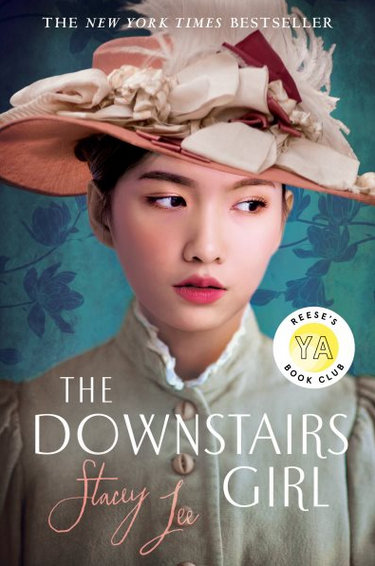
The Downstairs Girl

 by Stacey Lee

I loved this book.  The language and writing were beautiful and the story was interesting and insightful.  It is filled with surprising similes.  Written in first person, the story takes place in 1890 in Atlanta where 17-year-old Chinese girl Jo Kuan lives with Old Gin, an older man who took her in when she was a baby.  They secretly live in the basement of the home and print shop of one of the local newspapers. 

At the beginning of the story Jo works in a hat shop decorating women’s hats but is fired because she makes the customers “uncomfortable.”  She returns to work for the wealthy Paynes as a lady’s maid to their haughty daughter, Caroline, who is about the same age as Jo.  The story leads us through mysteries (to learn who Jo’s parents are), romance, surprising challenges, and adventure, all with the thread of discrimination running through it—against blacks, Chinese, and women—and their attempts to overcome it. 

It was just so well and engagingly written.  One thing I will say is that Jo seems older and more mature than any 17-year-old I’ve ever known.  And though published as a teen/young adult book, I think some of the content would be more appropriate for a slightly older audience.

Quotes

Robby speaking. ‘”Sometimes things fall apart so better things can come together,’ he says gently....  “My point is, a blessing loves a good disguise.’”    p. 281,  ¶2, 4

“What is the job of a parent but to teach a child that she has worth so that one day she can transform herself into whatever she wants.”    p. 365 top

nm

Monday, February 5, 2024

The Frozen River

by Ariel Lawhon

  Excellent!  But then I’m a steadfast fan of Martha Ballard, anyway.  This book of historical fiction is based on 18th century midwife Martha Ballard’s diary.  It mixes actual characters and true events with fictional events and likely some fictional characters.
   The book opens with a childbirth, then quickly moves to Martha identifying a dead body that had been found frozen in a river.  She declares the cause of death as hanging.  The new-to-town physician claims otherwise.  Martha quietly seeks out more information over a period of several months.  Part of the story includes a minister’s wife who was raped by the dead man and another man who was one of the local judges and includes the court processes to bring the one left alive to trial.
   Family history research has given me an idea of the circumstances of women in the late 1700s into the 1800s.  I thought this book put meat on the bones of general research about the lives of women of the time—their limits in society, the general expectation of behavior, their role in the home and family, etc.  For that alone I think it’s worth reading if you’re interested in women’s history.
   There is a little language and there is a grizzly scene near the end. 
   The Author’s Note after the end of the book explains what and why Lawhon made changes, inclusions, exclusions, and some assumptions for the book.
   For more about Martha Ballard, read Laurel Thatcher Ulrich’s biography, The Midwife’s Tale.  Also, a transcription of Martha’s diary is available online at https://dohistory.org/diary/1785/02/17850208_txt.html.

Quotes
On keeping a journal.  “Memory is a wicked thing that warps and twists.  But paper and ink receive the truth without emotion, and they read it back without partiality.  That, I believe is why so few women are taught to read and write.  God only knows what they would do with the power of pen and ink at their disposal. ...Being privy to much of what goes on behind closed doors in this town, I have a rather good idea what secrets might be recorded, then later revealed, if more women took up the pen.    p. 39 ¶1

“To name a thing is a proprietary act.  It is a commitment.  Of ownership or care or loyalty.  It means something.  With that single word I have declared that this little beast [a silver fox] is mine, and that I have a responsibility to protect her.”    p. 94 ¶2

“If anyone had told me two decades ago, when I was buried in small children and endless chores, that one day I would sit at my desk in a warm, quiet house while the snow fell outside and complain of loneliness, I would have slapped them.  That future seemed as far away as Constantinople.
  “I would very much like to join the rest of the house in slumber, but I can already feel the creeping wakefulness that often assails me at night.  This is a new affliction, something that began once I rounded the corner of forty-five.  I never understood what a gift sleep was until it vanished.  Whereas, in all the decades before, I slept deep and heavy, soaking up every morsel of rest that was offered.  I now skim the surface, fitful, easily woken, and unable to drift off again.  On nights like this, no amount of physical exhaustion can induce my mind to shutter, so I read by candlelight instead.  It is the only time I allow myself this indulgence.  The joy of falling into another life, another world, is the one thing that mitigates the frustration of a sleepless night.”       p. 106 ¶5-6

“Words can be a gift, but so can silence.”    p, 192 last sentence

“The quilt is large, big enough to cover them both, and is made of scraps of fabric that I have gathered and kept over the years for this purpose.  Every year I make an extra quilt, sewn in bits and pieces at night before the fire when my other work is done....  I do this because every year there is a wedding.  Sometimes rushed.  Sometimes performed according to the standards of our town.  Yet each young bride finds herself in a new home and does not know how to make it her home.  This, a simple piece of bedding, is the answer.  Everyone must sleep, and to do so beneath a warm quilt, tenderly made, is the first thing that helps a house become a home.”    p. 193 ¶4

“I follow him to a table at the back and sink onto the bench with a groan.  This is a new thing I’ve discovered about myself in recent years.  The noises.  Stand and groan.  Sit and grunt.  Some days it seems that I can hardly take a step without some part of my body creaking or cracking and this—even more than the gray hairs and the crow’s-feet at my eyes—makes me feel as though I am racing down the final stretch of middle age.”   p. 167 ¶ last

nm